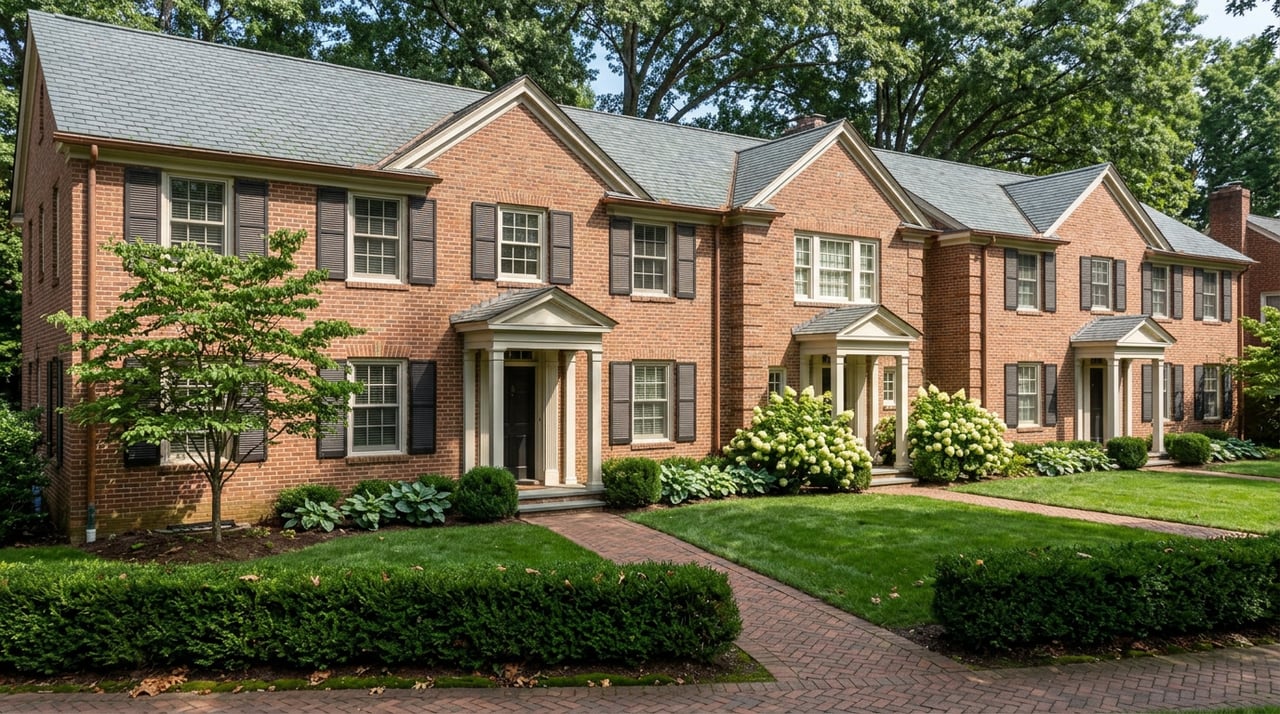
Two townhomes in Reston list for the same price, sit on comparable lots, and show identical square footage in the listing photos. Ask your lender to run the numbers and one of them will cost roughly $1,700 more a year to carry than the other. The listing price alone doesn't capture the full carrying cost.
That gap isn't a fluke of the market. It's a structural feature of how Reston is built, and it reflects the annual assessment and any applicable cluster fees, which buyers should include in their carrying-cost comparison. If you're comparing Reston against Herndon, Sterling, or anywhere else in Fairfax County, this is the number that changes the math.
What $890 Actually Buys
Every property inside Reston Association's boundary owes an annual assessment. For 2026, that figure is $890, due January 1 with late fees kicking in after March 1. Property owners who qualify for Fairfax County's tax relief program (based on age, disability, or income) pay a reduced $445.
The fee funds what most residents think of as Reston itself: 15 pools, 54 tennis courts, 55 miles of paved pathways, more than 1,300 acres of open space, and the four lakes RA maintains directly (Reston has a fifth, Lake Fairfax, but that one belongs to the Fairfax County Park Authority, not RA). It also covers design review, covenant enforcement, and the staff who keep all of it running.
None of that is optional. Reston Association's founding Deed of Dedication states plainly that no owner may waive assessment liability through non-use of the common areas or their facilities. The same document makes each assessment a continuing lien on the property the moment the board sets it. A lien is a recorded claim that has to be cleared before a sale can close, so unpaid RA dues are addressed during title work.
A Budget Vote That Explains the Number
The $890 figure isn't arbitrary, and it's worth understanding how the board landed on it, because the process tells you where the number is headed.
RA's Chief Financial Officer opened budget season in August 2025 by proposing a steeper increase, to $923, citing inflation and rising capital project costs. Board Vice President Izzy Santa noted at the time that staff's five-year forecast would carry the assessment to $1,092 by 2030 if the board fully funded the capital contribution level a working group had recommended.
The board settled on $890 instead, a 5% increase over 2025's $848, by cutting $175,000 from the swimming pool operating budget. That reduction pulls pool hours back closer to the 2024 schedule, a year after RA had all 15 pools open for the first time in half a decade. Board member John Farrell voted against the final budget, pointing to a member survey that ranked pools as the amenity residents value most after trails. The board approved it anyway on a 7-2 vote at its November 13, 2025 meeting.
The practical takeaway: the assessment rose less than staff wanted, but the tradeoff was fewer open-pool hours, not a smaller bill. If you're budgeting for a Reston purchase, treat $890 as a floor, not a ceiling. RA's own five-year outlook has it climbing toward $1,092 within the decade.
Additional Fees: Your Cluster
The RA assessment is only the first layer. Reston contains more than 160 separate cluster and condominium associations layered on top of the master association, each with its own board, its own budget, and its own fee schedule. A property might carry only the RA assessment, or it might carry RA plus a cluster fee, or in some condo buildings, RA plus a cluster fee plus a separate master association charge.
This is where two similarly priced listings diverge. Soapstone Cluster's 2026 annual assessment runs $1,880, which works out to about $156.67 a month. Add that to RA's $890 ($74.17 a month) and a buyer in that cluster is carrying roughly $230.83 a month in association fees alone, before any condo dues that might apply on top.
| Fee layer | Annual (2026) | Monthly equivalent |
|---|---|---|
| Reston Association only | $890 | $74.17 |
| RA + Soapstone Cluster | $2,770 | $230.83 |
A buyer comparing two $650,000 listings, one in a cluster with modest dues and one in a cluster like Soapstone, could see a genuine $150 or more monthly difference in carrying cost without either home being objectively better maintained or better located. The listing price says nothing about which cluster you're joining.
Why You Can't Opt Out
Buyers sometimes ask whether they can decline the RA assessment if they don't plan to use the pools or courts. The Deed of Dedication answers that directly: liability for the assessment cannot be waived by non-use of the common areas, and the assessment becomes a lien against the property as soon as the board establishes it for the year. That lien has to be resolved before a sale can close, so a seller with unpaid dues will need to settle them at or before closing, and a buyer should confirm the payoff amount as part of due diligence rather than assume it's zero.
RA also charges a transfer fee of $374 at settlement, a one-time cost separate from the annual assessment. It's a small line item to include on the closing cost sheet.
What This Means If You're Comparing Neighborhoods
Herndon and Sterling don't have an equivalent structure. Individual subdivisions and condo buildings in both towns carry their own HOA or condo fees, but there's no single master association layered across nearly the entire town the way RA covers Reston. That difference matters when you're weighing a Reston listing against a comparable one in Herndon or Sterling on price alone. The Reston number needs RA's assessment added to whatever cluster or condo fee applies, and the Herndon or Sterling number typically doesn't carry that second layer at all.
None of this makes Reston a worse buy. RA's assessment covers real infrastructure, trails, lakes, and pools that a lot of buyers specifically want, and the fee funds roughly 80% of the association's total revenue, according to RA's own board election materials, which tells you how central it is to keeping those amenities running. The point isn't that the fee is bad value. It's that the fee should be included when comparing offers.
Before You Write an Offer
A few documents will tell you more about true carrying cost than the listing description ever will:
- The RA resale disclosure packet, which shows current dues, budget details, and reserve information
- Your target cluster or condo association's own resale packet and most recent budget
- The last 12 months of cluster board meeting minutes, which often surface pending special assessments or deferred maintenance before they become your problem
- Confirmation of any outstanding lien balance on the specific property, not just the cluster's general rate
Pulling these before you write an offer, rather than after ratification, gives you room to adjust your offer or walk away if the numbers don't work.
A Few Questions Worth Asking Directly
Does every Reston property pay the RA assessment? Yes. Membership in Reston Association is automatic for property owners inside its boundary, separate from any cluster or condo association a specific home might also belong to.
Is the assessment likely to keep rising? RA's board has publicly discussed a five-year plan that would bring the assessment to roughly $1,092 by 2030 if it fully funds the capital contribution level its working group recommended. The final number each year depends on the board's vote, but the trend has been upward for several years running.
Can a buyer negotiate the assessment or lien payoff into the deal? The lien itself has to be cleared before closing, but how that payoff is handled, whether the seller covers it outright or it's addressed in the purchase price, is a negotiable point worth raising early with your agent rather than discovering at the settlement table.
If you're weighing a Reston listing against something in Herndon, Sterling, or another Fairfax or Loudoun community, the sticker price is only half the comparison. Selestay Group can walk through the specific cluster's fee history and resale packet with you before you write an offer, so the number you're comparing is the one you'll actually pay. Let's Connect.
This article is general information, not legal, tax or financial advice. Consult a qualified professional about your situation.